Showing posts with label Gulfport. Show all posts

Wednesday, January 28, 2015

Wood Stork

Wood Stork
Wood Stork (Mycteria americana), Searching for his favorite foods of fish, reptiles or amphibians at the Thompson Sports Complex in Gulfport, FL.

Wood Storks or as they are sometimes called Wood Ibis, are the only storks in America. They can be found in Florida in swamps, marshes and ponds.

Friday, January 23, 2015

Wood Stork

Wood Stork
This Wood Stork was probing for dinner in the pond at the Thompson Sports Complex Park, in Gulfport, FL. The Wood Stork is the only real stork we have in the United States.

Wood Storks stand between 40-44" tall. Their heads are bare. They fly with their necks extended. Wood Storks can be found on or near the coast, cypress swamps and mangroves. They nest in colonies. Wood Storks are resident in Florida and Georgia and rarely along the coast from S Carolina to Texas.

Friday, November 14, 2014

White Ibis (Eudocimus albus)

White Ibis (Eudocimus albus)

This White Ibis is only one of a flock of maybe 25 who decided to visit me on the edge of the little pond at Thompson Sports Complex Park in Gulfport, FL.

They can be found in the deep south and are very common in the Tampa Bay area. They are friendly birds and will rarely fly off if a human comes around. In this case, it was exactly the opposite. The moment I appeared, these guys decided to join me. It was difficult to get one alone. This guy was only a few feet from me, making it very easy to get this capture.

They eat insects and continuously probe the grass and the water looking for food. They are fairly large birds at 22-26 inches tall. They weigh about 2 1/2 lbs. These birds are social and nest in trees at night.

Thursday, November 13, 2014

Please Help With ID

ID Wanted

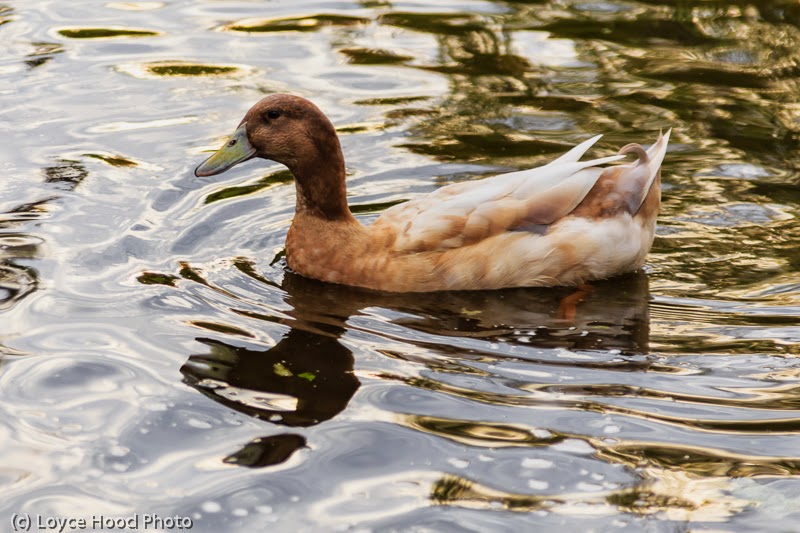
I've posted photos of this duck and his/her mate about a year ago. I'm still trying to find out what kind of duck this is. With all the nature photographers out there, I can't believe no one knows what it is called. I've only found one other photo of ducks that look like this through Google and I think it was the same pair. Whoever posted it didn't include the name, so it was no help.

They are so pretty. They hang on a little pond in Gulfport, FL along with some Mottled Ducks, White Ibis, a pure white duck, a few Mallards and a couple of Moorhens. There is only 1 pair of them. They are much larger and longer-backed than Mallards as you can see in this photo.

Your help is greatly appreciated. Thanks for looking.

Sunday, May 19, 2013

Southern Magnolia

Southern Magnolia

Southern Magnolias (Magnolia grandiflora) are not only beautiful flowers that smell magnificent, but they are also very interesting. Their stamen are like little flowers in themselves. Unfortunately, Magnolias only bloom for one day, leaving brown, dry petals, which are not quite as pretty as the petals were the day before.

However, the stamen stay to become beautiful soft, red cones which last a very long time. I've never picked up one to see if they are fragrant which makes me wonder why I've never thought to do that before.

Wednesday, September 30, 2009

Black Skimmer Landing

In keeping with the bird theme that seems to be very popular this week on our blogs due to a couple meetups that included bird shooting, here's just one more.

Just before sunset every night, the Black Skimmers, Laughing Gulls and Terns gather on the beaches to roost. This one, a Black Skimmer is just coming in. It's a pretty amazing sight to see them all lined up--usually facing the same direction roosting on the beaches.

As a bonus, I'm attaching a second image showing more of the flock. There are probably 100 or more birds on this beach just like this.

I've seen them flying at night picking up food on my canal in my back yard. It's amazing to watch how they get their food. If you look closely, you'll notice that their lower beak is quite a bit longer than the upper beak. That's so they can fly (really fast) with their lower beak in the water scooping up food to eat. They have very long wings for their body size. I'll see if I can find a photo where I've caught them swimming for a post later on.

Settings used for these photos are as follows. The shooting mode is in continuous in case one of them or many of them take off, ISO is 200 because although it is nearing sunset, it's still quite bright. The exposure is 1/250 at 7.1, in aperture priority at 250mm with my 55-250mm lens. I used partial metering off the beach so as to not blow out the whites. The shadows were lightened slightly using Lightroom.